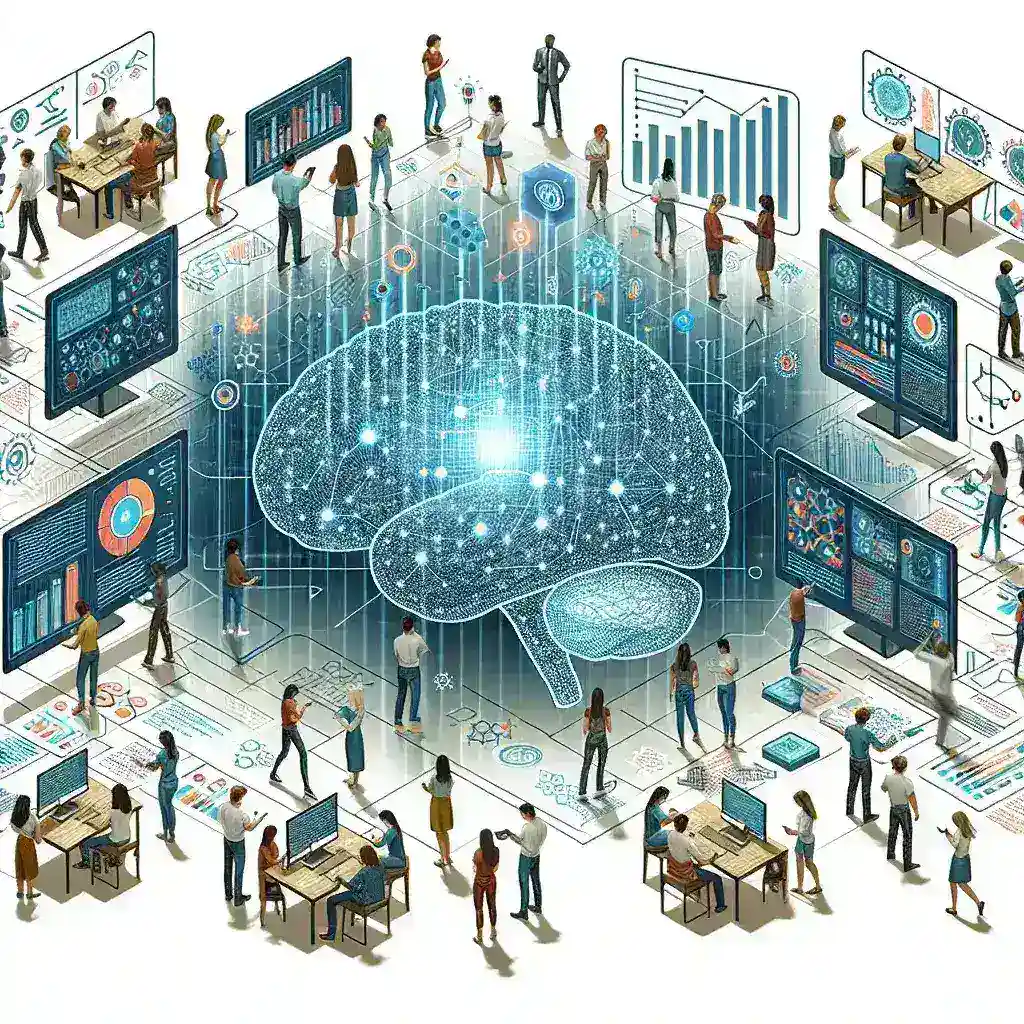
The Rise of No-Code AI Agent Development
The artificial intelligence revolution has democratized technology in ways we never imagined. Today, building custom AI agents without coding is not just possible—it’s becoming the preferred method for businesses and individuals who want to harness the power of AI without technical barriers. This transformative approach has opened doors for entrepreneurs, marketers, customer service managers, and creative professionals to develop sophisticated automation solutions.
The no-code movement represents a fundamental shift in how we approach technology development. Instead of requiring years of programming education, modern platforms provide intuitive interfaces that allow users to create complex AI systems through visual workflows, drag-and-drop components, and natural language instructions.
Understanding AI Agents and Their Capabilities
Before diving into the construction process, it’s essential to understand what AI agents actually are. An AI agent is an autonomous software entity that can perceive its environment, make decisions, and take actions to achieve specific goals. These digital assistants can handle tasks ranging from customer service inquiries to data analysis, content creation, and process automation.
Modern AI agents possess remarkable capabilities:
- Natural language processing for human-like conversations
- Learning from interactions to improve performance over time
- Integration with multiple platforms and databases
- 24/7 availability without human intervention
- Scalable performance handling thousands of simultaneous interactions
The beauty of contemporary AI agent development lies in its accessibility. What once required teams of skilled developers can now be accomplished by individuals with clear objectives and basic computer literacy.
Essential No-Code Platforms for AI Agent Creation
The marketplace offers numerous platforms specifically designed for non-technical users to build AI agents. Each platform brings unique strengths and specializations to the table.
Conversational AI Platforms
Platforms like Chatfuel, ManyChat, and Dialogflow provide robust environments for creating conversational AI agents. These tools excel at building chatbots for customer service, lead generation, and user engagement. Their visual flow builders allow users to map out conversation paths, set up conditional responses, and integrate with external services.
Workflow Automation Tools
Zapier, Microsoft Power Automate, and Make (formerly Integromat) enable users to create AI-powered workflow agents. These platforms connect different applications and services, allowing for sophisticated automation sequences that can process data, send communications, and trigger actions across multiple systems.
Specialized AI Agent Builders
Emerging platforms like Voiceflow, Landbot, and Botsify focus specifically on AI agent creation with advanced features such as voice integration, multi-channel deployment, and analytics dashboards. These tools provide more specialized functionality for users who need sophisticated AI capabilities.
Step-by-Step Guide to Building Your First AI Agent
Phase 1: Planning and Objective Setting
Successful AI agent development begins with clear planning. Define your agent’s primary purpose, target audience, and success metrics. Consider questions such as: What specific problems will this agent solve? How will users interact with it? What integrations are necessary for optimal functionality?
Document your requirements thoroughly. This planning phase prevents scope creep and ensures your agent serves its intended purpose effectively. Consider creating user personas and mapping out typical interaction scenarios to guide your development process.
Phase 2: Platform Selection and Setup
Choose a platform that aligns with your technical comfort level and project requirements. Most no-code platforms offer free trials, allowing you to experiment before committing. Create your account and familiarize yourself with the interface through available tutorials and documentation.
Many platforms provide template libraries that can serve as starting points for common use cases. These templates can significantly accelerate your development process while providing best-practice examples.
Phase 3: Designing Conversation Flows
Map out your AI agent’s conversation structure using flowcharts or the platform’s visual builder. Start with simple interactions and gradually add complexity. Consider various user inputs and how your agent should respond to each scenario.
Key elements to include in your conversation design:
- Welcome messages that clearly explain the agent’s capabilities
- Fallback responses for unrecognized inputs
- Escalation paths to human support when necessary
- Confirmation steps for important actions
- Personalization elements that enhance user experience
Phase 4: Integration and Data Connection
Connect your AI agent to relevant data sources and external services. This might include customer databases, inventory systems, calendar applications, or communication platforms. Most no-code platforms provide pre-built connectors for popular services, simplifying the integration process.
Ensure proper data security and privacy compliance throughout this phase. Understand how your chosen platform handles sensitive information and implement appropriate safeguards.
Advanced Features and Customization Options
Once your basic AI agent is functional, explore advanced features that can enhance its capabilities. Machine learning components allow your agent to improve over time by analyzing interaction patterns and user feedback.
Natural language understanding (NLU) capabilities enable more sophisticated conversation handling. Train your agent to recognize intent, extract entities from user messages, and respond contextually to complex queries.
Multi-channel deployment extends your agent’s reach across various platforms simultaneously. Configure your agent to operate on websites, social media platforms, messaging apps, and voice assistants, maintaining consistent functionality across all channels.
Testing and Optimization Strategies
Comprehensive testing ensures your AI agent performs reliably in real-world conditions. Conduct thorough testing scenarios that cover typical user interactions, edge cases, and error conditions. Invite colleagues or target users to interact with your agent and provide feedback on its performance.
Monitor key performance indicators such as user satisfaction rates, task completion percentages, and response accuracy. Most platforms provide analytics dashboards that offer insights into user behavior and agent performance.
Implement continuous improvement processes based on usage data and user feedback. Regular optimization ensures your agent remains effective and relevant as user needs evolve.
Common Challenges and Solutions
Building AI agents without coding presents unique challenges that require creative solutions. Users often struggle with conversation flow complexity, leading to confusing or ineffective interactions. Address this by starting simple and gradually adding sophistication as you gain experience.
Integration difficulties can arise when connecting multiple systems. Research available connectors and APIs before committing to specific platforms. Consider using middleware solutions when direct integrations aren’t available.
User adoption challenges may emerge if your agent doesn’t provide clear value or is difficult to use. Focus on solving specific user problems and ensure your agent’s interface is intuitive and helpful.
Future Trends in No-Code AI Development
The no-code AI landscape continues evolving rapidly, with new capabilities emerging regularly. Voice integration is becoming more sophisticated, enabling natural speech-based interactions. Visual AI components allow agents to process and respond to images and videos.
Artificial general intelligence (AGI) developments are gradually making AI agents more autonomous and capable of handling complex, multi-step tasks without explicit programming. These advances will further democratize AI development, making powerful capabilities accessible to even more users.
Industry-specific solutions are emerging that provide pre-configured AI agents for healthcare, finance, education, and other specialized sectors. These solutions reduce development time while ensuring compliance with industry regulations and best practices.
Conclusion: Empowering Innovation Through Accessible AI
Building custom AI agents without coding represents a paradigm shift that empowers individuals and organizations to innovate without traditional technical barriers. The combination of powerful no-code platforms, comprehensive educational resources, and supportive communities creates an environment where anyone can develop sophisticated AI solutions.
Success in no-code AI development requires patience, experimentation, and a willingness to learn from both successes and failures. Start with simple projects, gradually building complexity as your understanding deepens. The investment in learning these skills pays dividends through increased productivity, enhanced customer experiences, and new business opportunities.
As AI technology continues advancing, the gap between professional development and no-code solutions continues narrowing. Today’s no-code AI builders are tomorrow’s innovation leaders, driving digital transformation across industries and creating solutions that were previously impossible without significant technical expertise.
Leave a Reply